
RO-RO, FERRY & BREAKBULK OPERATIONS
Operations software engineered for rolling and project cargo
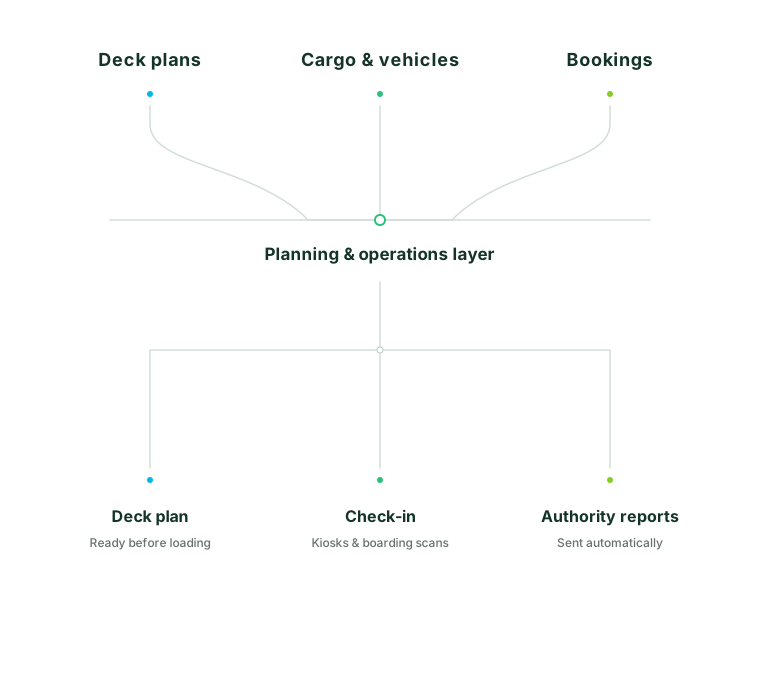
Deck planning, bookings, and check-in built from each vessel's deck geometry and the cargo it carries.

Where the engineering focus sits
Ro-Ro and breakbulk planning depends on deck geometry, axle loads, and lashing points that container-first tools leave out. Planners fill the difference with spreadsheets and experience.
Case studies
Real work already in production — a closer look at the kind of problems it solves, before you describe your own.
-
01
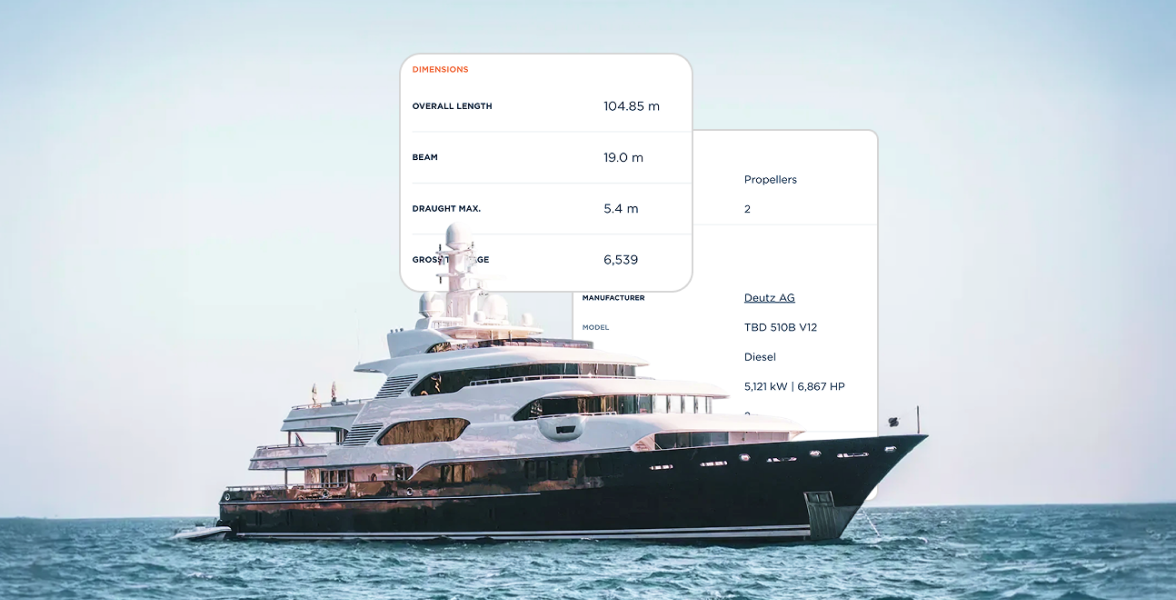
Interactive 3D vessel model with deck switching and live sensors
Challenge
A large number of onboard sensors and cameras had to reach users in real time, both on the vessel and at the owner's office ashore.
Solution
Engine, electrical, wind, speed, and supply sensors stream to two servers, one on board and one in the owner's office. An interactive 3D model with deck switching shows every sensor and camera live, on a database built for high load. Owner and crew work from the same live data, on board and ashore, under constant high-volume updates.
-
02
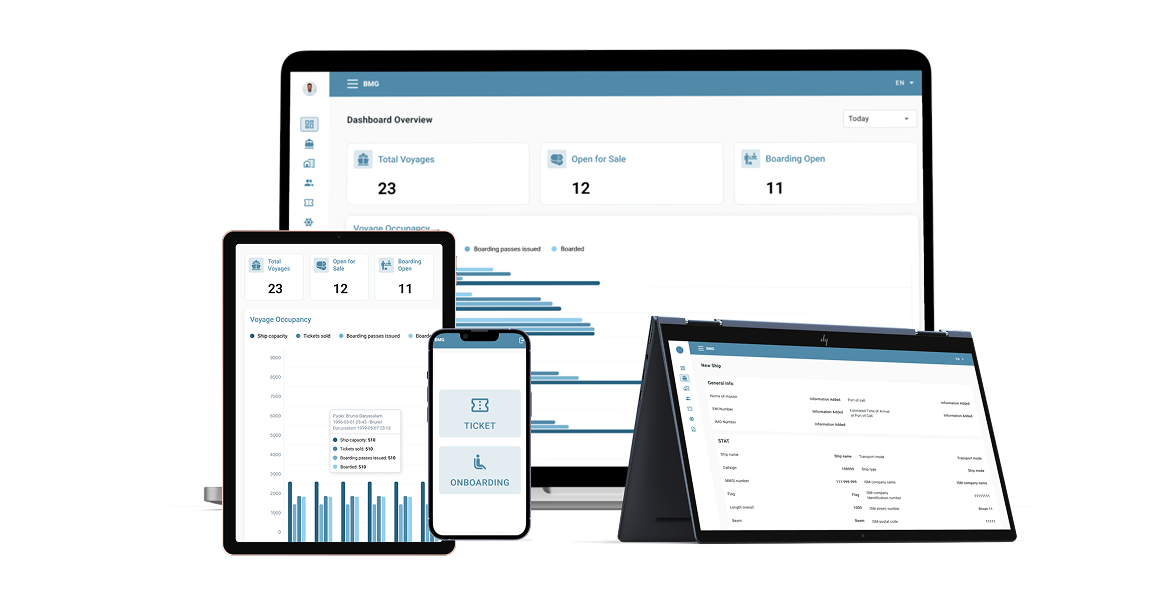
Passenger check-in and boarding for German ferries
Challenge
German regulation requires every ferry, including city crossings, to check in and track its passengers.
Solution
Kiosk, vessel, and office applications: passengers register and pay at the terminal, receive a barcoded boarding pass, and are scanned at boarding and disembarkation, with records synchronized between ship and office. Every boarding scan reaches the official German database automatically.
-
03
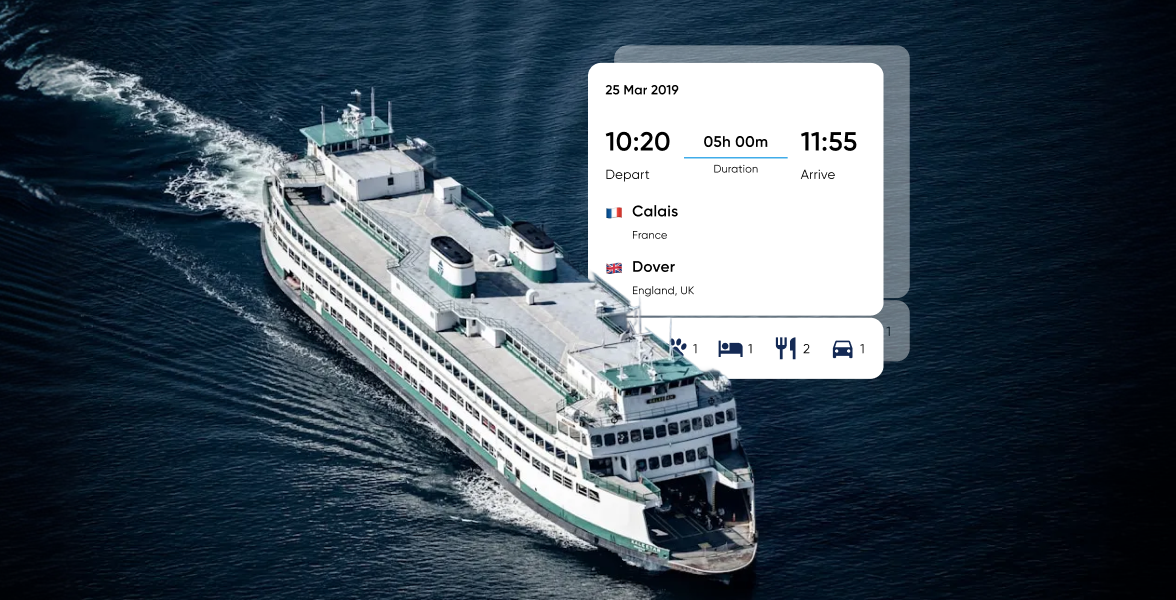
Ferry booking platform moved to a modern stack
Challenge
A ferry booking platform for travel agencies and individual travellers needed more speed and convenience, with every existing function kept.
Solution
Migration to Vue 3, Pinia, Vuetify 3, and Vite, with the codebase refactored to use the new stack fully, plus thorough testing and documentation. Every function preserved, with performance benchmarks exceeded.
-
04
Port system for berths, cranes, and cargo movement
Challenge
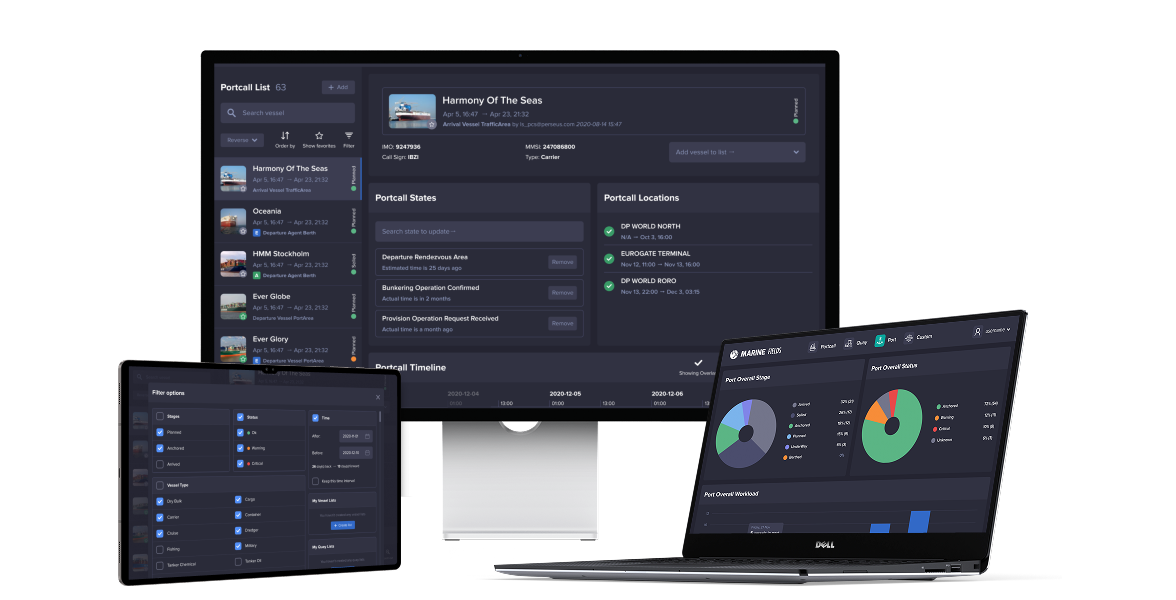
The provider needed a platform its own customers could use to follow vessel location, status, and statistics across fleets and ports.
Solution
Live vessel positions and statuses, statistics by vessel, status, and port, in-card chat, and separate status lists per user. The front end was rebuilt from Angular to Vue and the backend extended; a companion port system covers berths, cranes, and cargo movement. Launched quickly and within the development budget; the provider used the platform to bring major companies on board.
-
05
Vehicle and container screening data shared with national customs
Challenge
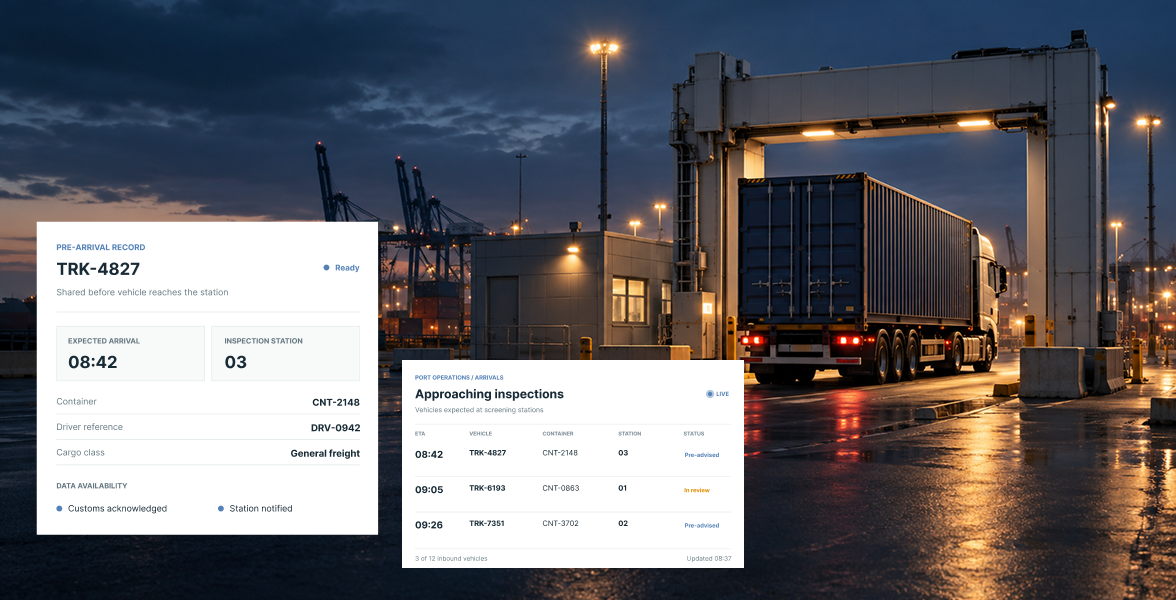
A port cargo- and vehicle-screening platform needed to exchange data with national customs and keep every inspection station informed in advance.
Solution
An integration module for secure scheduled and on-demand data exchange with customs, plus advance details on arriving trucks, drivers, containers, and cargo for each inspection station. Inspection stations receive arrival details before vehicles reach them.
-
06
Geo-alert module inside an existing fleet system
Challenge
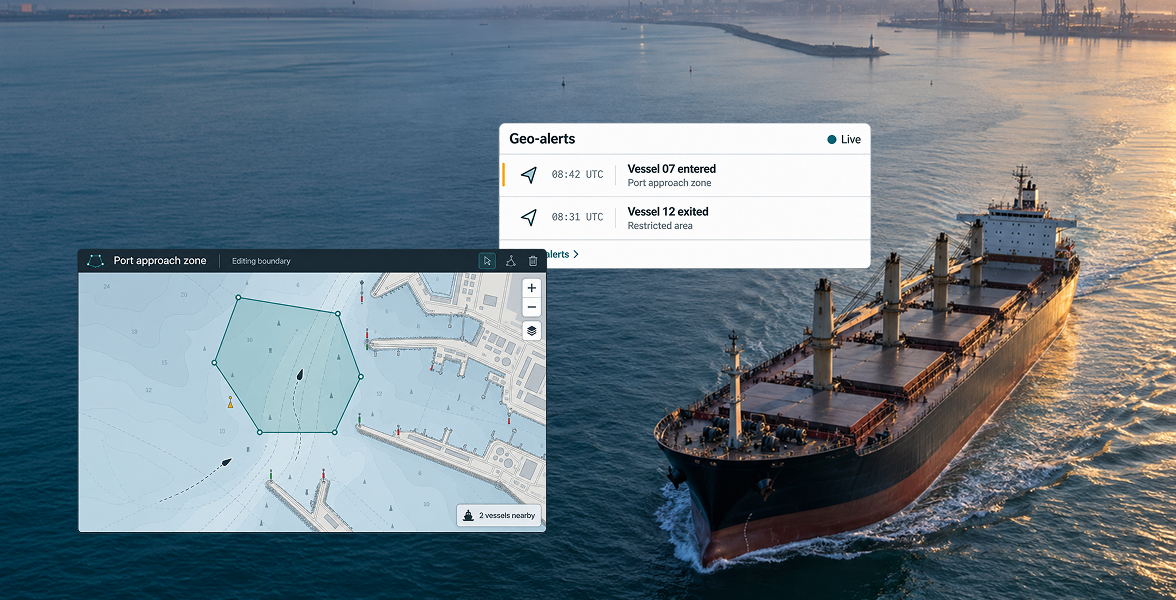
The shipowner needed geographic alerting inside the system its dispatchers already used: zones around ports, hazardous areas, storm paths, and route checkpoints.
Solution
A map module where dispatchers draw their own zones. Fleet positions are tracked in real time, alerts fire automatically on zone entry and exit, and checkpoint zones track schedule adherence. Dispatchers gained fleet-wide zone alerts inside the system they already use.
Three ways to start
-
01
Integration & Middleware Delivery
The connections between your systems get designed, built, tested, and handed off.
-
PMS, ERP, sensor, carrier, and authority connections
-
Design, build, testing, and deployment
-
Documentation your team can work from
-
Optional post-launch support from the same engineers
-
-
02
Product Engineering Pod
A dedicated team works through your roadmap sprint by sprint, alongside your people.
-
Dedicated engineers on your roadmap
-
Shared planning and regular demos
-
Scope agreed sprint by sprint
-
Capacity that grows with the roadmap
-
-
03
Modernization & Migration
Legacy systems move to a current stack while daily operations keep running.
-
Technical audit of what exists
-
Rebuild on a current stack, every function preserved
-
CI/CD, automated testing, and monitoring
-
Optional support after the switch-over
-

Talk to the people who build it


Daria Pilyugina
Senior Business Development Manager
Technology and delivery partnerships: product integrations, subcontracted development, referral cooperation.
*
Confidentiality built into every engagement.
An NDA is signed before discovery, and code and data access is limited to the assigned engineers.
FAQs
-
Can booking and check-in connect to our existing systems?
Yes. Booking, kiosk, vessel, and office applications share one dataset, and passenger records can pass to authorities automatically, as in the German ferry check-in project.
-
We run a mixed fleet. Does every vessel need its own setup?
Each vessel class is described once: decks, lanes, ramps, and limits. New vessels of the same class reuse that profile.
-
Can we start with one route or one vessel class?
Yes. The first vessel class or route is scoped after the discovery call, and others are added to the same model.
-
Where does our operational data live?
On the servers you choose, including your own, on board and ashore. Encryption standards, access roles, and hosting location are fixed in the technical proposal for each project.
-
Who maintains the system after launch?
The engineers who built it can stay on for support, updates, and new modules under a separate agreement. Full documentation is handed over either way, so your own team can take it on.

Still have questions?
Not covered here?
A direct question usually gets a faster answer.
Tell us about your project
A few sentences are enough to start –
we'll shape the details together on the call.
- Reply within one business day
- A concrete next step
- NDA on request
- 5.0 on Clutch


