Deployments need all hands on deck, happen at night, and get postponed "until things calm down." Delivery speed is capped by fear, not capacity.
The same bugs keep coming back
Fixes in one place break another. Without regression coverage, every change re-opens old wounds — and the team re-tests everything by hand, every time.
Test automation exists, but nobody trusts it
Flaky suites, red builds ignored, tests skipped to hit deadlines. Automation that cries wolf is worse than no automation at all.
Code volume has outgrown review capacity
AI-assisted development multiplied output. Testing is now the only independent check standing between generated code and production users.
A defect in production is no longer just a bug
Lost bookings per minute of downtime, transactions that don't reconcile, alerts operators learn to ignore — in your industry, quality gaps become revenue and compliance events.
Quality as an engineering discipline
TEST STRATEGY
Testing designed around what failure actually costs.
Risk-based strategy: critical paths covered first
Right mix of unit, integration & end-to-end coverage
Test design for money paths, data integrity & edge cases
QA process audit for existing teams
AUTOMATION
Test suites the team actually trusts.
Automation engineered for stability, not demo day
CI/CD integration: every commit verified automatically
Regression suites that make releases boring
Maintainable frameworks your team can extend
SPECIALIZED TESTING
The failures that only show up under pressure.
Performance & load testing against realistic peaks
Integration testing across third-party systems
Security-focused test scenarios
Data migration & reconciliation verification
QUALITY IN THE PIPELINE
Not a phase. A property of the process.
Quality checks run from the first commit to production
monitoring — finding issues where they're cheapest to fix.
Shift-left: testing starts with requirements, not after code
Quality gates in CI/CD — no manual bottlenecks
Production monitoring closes the loop back to tests
Works embedded in your team or as an independent function
How QA engagement works
Stage 01
Quality assessment
Current coverage, processes, and escaped-defect history reviewed. Where quality actually stands — measured, not felt.
Stage 02
Risk mapping
Business-critical flows identified and ranked: what must never fail, what fails expensively, what can tolerate a bug.
Stage 03
Strategy & Toolchain
Test approach, automation framework, and environments defined — fitted to your stack and release cadence, not a template.
Stage 04
Automation build-out
Critical paths automated first. Suites wired into CI/CD so verification happens on every change, without asking.
Stage 05
Specialized passes
Load, integration, security, and data-integrity testing against realistic scenarios — the conditions your users will create.
Stage 06
Continuous quality
Metrics, monitoring, and maintained suites keep confidence current as the product evolves — with your team or ours running it.
Stage 01
Quality assessment
Current coverage, processes, and escaped-defect history reviewed. Where quality actually stands — measured, not felt.
Start with a conversation
Tired of deployments that need all hands and prayers?
Releases stalled until "things calm down"? The path
from fear-driven shipping to routine deployment starts
with honest talk about what your QA actually covers.
What must never fail — and how it's tested
Every industry has failure modes a generic test plan won't
imagine. These are the scenarios worth engineering tests for.
01
Travel & Hospitality
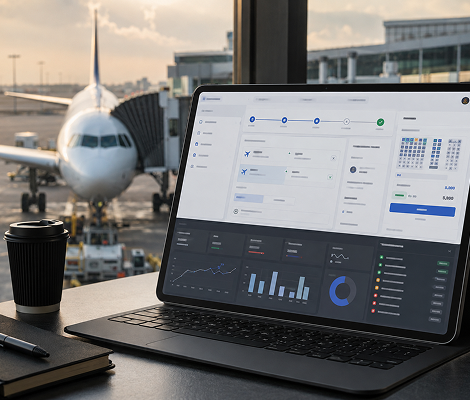
Booking flows load-tested against sale-day peaks, not average traffic
Race conditions hunted deliberately: double bookings, expired holds, stale availability
Pricing and currency logic verified across providers, caches & time zones
Failover testing for GDS/NDC dependencies — graceful degradation, not blank screens
Refund, exchange & cancellation paths tested through their full lifecycle